Enmity's Media Page (2026)
Visual Novels
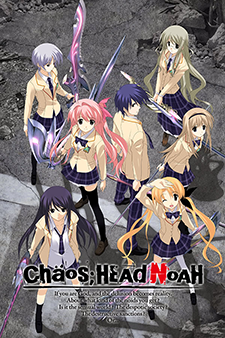
Chaos;Head
Started in 2025. Full review here!
Video Games
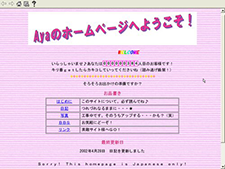
Welcome to Aya's Homepage
A cute, short mystery/puzzle game about investigating the home page of a girl who went missing. Not much to say besides that the web design/kiriban/abandoned amateur personal page vibes were immaculate. Worth spending a single sitting reading. Thankfully for doofuses like me who can't solve simple kanji quizzes the hint system just gives up and hands you the answer if you keep pestering it.
Manga
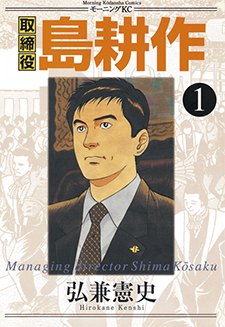
Managing Director Shima Kousaku -> all prequels -> President Shima Kousaku
I STILL kept reading this. I became a hardcore fujo for a certain yaoi in the series btw and I still ship them like burning and am trying to write fic right now. Mostly, you can say it's more of the same Shima, different places, different jobs, different challanges that come with the times and the onslaught of the Lost Decade, Shima himself grows a little too although you can't expect a literal boomer who's in his 50s to undergo drastic personality overhauls in the "mere" span of a single arc. Characters change gradually and for the most part it's done in a natural manner, as if life goes on. Some very questionable writing choices are made in a certain arc that I expect you (yes, you) to side-eye (more than you usually would reading this series anyway) when they come up, and you will see it coming. (The author is a boomer after all.)
As for the prequels, I quite enjoyed them. I liked seeing the Showa era through the perspective of someone who spent half their life living in it. There is a long storyline running through the "college" arc that does not try to hide its massive pro-centrist message, so just keep that in mind, but the story is still quite worthwhile in my opinion anyway and I empathically do not regret having read the prequels. Basially it's just more Shima but set when he's in his 20s and early 30s and you get to see the old cast again, every single damn Glup Shitto half of which will inevitably appear in later arcs anyway by which they will have disappeared from the story long enough to invoke another Glup Shitto reaction all over again.
The problems with women, reused plot points and the negative treatment of [REDACTED] are still around - but this is far enough into the series, very far enough that having stuck reading it this far and still finding myself being entertained pretty consistently means that it ultimately wasn't time wasted. Except for all the hopes I placed into [REDACTED] of course which makes me feel like I'm losing chess to a dog. The yaoi (you-know-which) is still top tier though. Actually I literally think those two are true Love. Capital L. I've temporarily dropped reading this series for a while because burnout is finally settling in after reading nonstop for 4 months. I will come back however.
MW
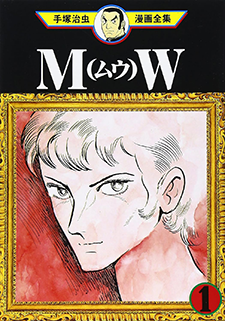
I WISH I HAD READ THIS *COMPLETELY* UNSPOILED!!!!. IN FACT I WISH I COULD FORGET ABOUT IT SO I COULD READ IT ALL OVER AGAIN AND AGAIN. Splendid art and thoughtful paneling from a refined artist, complimenting each other to tell a gripping story with many twists. Like Shima's time capsule vibe MW is also deeply steeped in the 1970s, although in a way that somehow feels even more vivid and striking, the pages drenched with references to the newsworthy issues of its time like the Vietnam War and a Lockheed bribery scandal involving politicans from multiple countries including Japan's prime minister at the time. Of course, despite being undeniably a creation of its era (in ways both good and bad) the story's unrelenting depiction of all the world's "evils" -- this is explicitly the intention of the work -- can still ring hauntingly true even today.
Michio is a terrifying, visceral character and in many ways he feels like "the personification of the skeletons of humanity's closet ... coming home to roost" ... sorry, that was terrible. It's no surprise that his name sounds like the word for "unknown" (michi) -- in the sense of all the sorts of wickedness that lurk all around, even if they're not always seen, and in the sense of him bringing all that wickedness to the surface as though to punish ignorance of such evil itself. In some ways he might be so outlandish, his actions so insane and his morals so utterly nil that he can become less of a believably human person and more of an orchestrator of atrocity, and indeed he is, even his brutal acts embody evil's empty caprice, forever unsatisfied, but in the end I'm still left with the feeling that the human inside him, however mangled, hasn't yet been completely killed. Yet, it's still not the catharsis I expected, which is one of the reasons why this story leaves such a lasting impression on me. God I wish I had known absolutely nothing about this going in.If I were to say something I personally find the most negative part of the story, it's how a certain female character is handled. Not the crazy evil gay twink LMAO -- I mean I agree to an extent but the commentary about it to the fullest extent I agree with has already been made by a few people that I don't need to feel to add to it -- but her. I don't mind that those things happened to her, and that she reacted that way to them, they make sense in my head when supplied with a little imagination, but the way she is written in the actual work comes off like she is just fully puppeted by forces outside of her control and there's not a lot of examination on her state of mind during such a complex situation even though I think it could've been really interesting to try and depict the conflicted mindset of someone in her place. Still, although a product of the time in many senses of the word, MW is still raw and special, a work I am unlikely to forget anytime soon. I bought a physical edition as of writing this and am waiting for it in the mail. Maybe one day I can get my wish for ultra rare giant collector's edition granted...
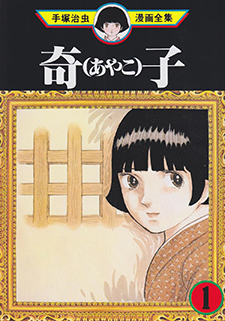
Ayako
I admit this story involves too much Japan (during the occupation specifically) context that I feel like a lot of it maybe got missed by me? Also the way these characters talk is so hard to read for me I gave up and just read the translation where the translator made all these exact characters talk in exaggerated accents. Cause they probably genuinely talk like that from the way they conjugate their verbs, how should I know. Still, it did make me want to read nonfiction about the occupation era because the portrait of the time in this story is quite vivid and harrowing. Also, in the opening of the story Jirou's evil decrepit dad gets mad at him that he didn't die honorably in WW2 and his brother seems annoyed with him that he didn't die in an Allied prison?!!? Lol? Anyway, considering the setting, despite the Allied forces being an easy target (Jirou sold out other soldiers to the Americans in fact and is now a spy for the Red Purge) and a brief mention to the Tribunal being made, if anything the story seems to condemn Japanese society and its "family values" just as strongly (if not worse, since we get to see them a lot more and a lot more closely in their pettiness and stupidiy compared to the Americans being in the background doing things behind the scenes). The story is intricate and strikingly drawn, but reading it feels like staring for a long time into a deep lake in complete darkness and silence, it's uncomfortable and there's quite a lot of heavy subject matter involved and often the principal characters are the one partaking in immoraity so it's very hard to root for them, it feels almost strangely helpless watching them continue to ruin themselves year after year. I do feel like it's part of the intent, to depict a group of people so consummately drenched in sin and intrigue -- and they're family, no less, and the possibility of their madness running in the blood is brought up on page at one point -- symbolized by Ayako's existence and what eventually happens to her (and them), that the reader is just powerless to do anything except finish the story to the end just like how these sad and terrible people can do nothing but be swallowed by the long shadow of their past sins catching up to them, little by agonizingly little.
I also feel like the female characters could've done with some more interiority, I don't mind a frank portrayal of cowardly, tyrannical patriarchs doing abusive power plays to the women around them, that happens in real life, I just would've liked to know those women a little better even if it's just in regards to how they feel about what's happening to them. I did get some of it with Ayako herself, which there ought to be since she is the titular character.
I don't regret having read Ayako, it does make me think, it makes me curious, the art is beautiful and fitting such a twisted tale, but it's not something I necessarily enjoyed reading.
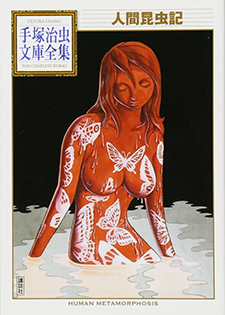
Book of Human Insects
YEAH. SHE IS THAT BITCH. AND YOU WILL NEVER BE HER!!! Ahem. This story was quite the wild ride. I definitely see Toshiko as the proto-Michio, or like she has elements of what would become him anyway, but while he manages to be something both like and unlike her, Toshiko remains also singular and unique to herself (ironic to describe Toshiko like this considering her whole schtick). (Interestingly in 1976, when MW was first released Toshiko would be around the same age as Michio). Sometimes I couldn't follow the progression clearly (I blame my reading comprehension) and had to be helped partially by context but I thoroughly enjoyed going along for Toshiko Tomura's wild ride and reveling in how ruthless and unremorseful she is. It was also pretty funny seeing how every single guy gets warned that she ruins the lives of everyone who gets close to her but they keep thinking they're built different??? She's very charming and devious, although like Michio who arrived after her, but even moreso than him (who at least is tied down by Garai and their shared experience 15 years ago), as far as I recall anyway (and which might have actually just been incomplete comprehension), she remains quite mysterious and unknownable even in the end -- which might've been the point, that no one will know her true self because she is constantly transforming. Perhaps she herself doesn't consciously think about "the original her" considering she molts and morphs into new forms so naturally it may be synonymous to her with simply living. Even though she does have a very select few people in her past who seem like they could've made her become something closer to human -- grounding her to the world of the peons and the phillistines with a base need for genuine connecton and affection -- in the end I didn't, or rather, it's as if I'm not allowed to walk away with the reassuring and indulgent verdict that she's not completely cold-blooded where it matters.
A mild negative about the story is its pacing. It's a bit uneven and sometimes slows down to describe concepts at length that might not necessarily be needed to keep the story going at a pleasant, brisk pace. I also didn't like how Toshiko was coerced into sex several times, which I felt wasn't strictly necessary and could've been replaced with consensual sex scenes instead, since she's already such a femme fatale-esque character. However, I will acknowledge sexual violence does play a major part in two separate important plot points and I thought they were handled with gravity and seriousness, not gratuitous.
Anyway, I enjoyed Insects! I miss her already.
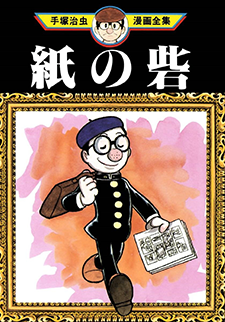
Paper Fortress
Not much I could say to this besides that first of all the author's art is expressive and lively as ever. All of the stories here are semi-autobiographical, based on the author's own experiences surviving the firebombing of WW2 and the harsh hunger during the Allied occupation, his days at medical school while simultaneously drawing comics for newspapers, trying to strike it big as a mangaka, getting quite the severe constructive criticism from a creator he admires, being tasked to draw pin-ups of women and having to take the job because he can't be picky... there's even a story written in the perspective of a house where many aspiring mangaka worked, some of which ended up becoming quite famous such as the Fujiko F. Fujio duo. It's fairly obvious the narrative has been tweaked, embellished, and sprinkled with humor and pathos to create an entertaining story, which combine well with art that knows how to set the tone -- but even if it's been fictionalized, there's an unmistakable "heart" that comes from drawing from the well of real experiences, combined with wry self-derision that practically leap off the panels of the author's halpless stand-in being constantly at the mercy of cruel fate and his own stomach pangs. If you want a manga that's closer to a documentary, hop on The Osamu Tezuka Story instead, an authorized biography so-to-speak which was written by his associates not long after his passing as a sort of tribute.
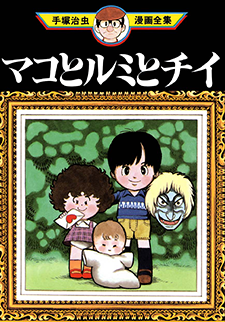
Mako, Rumi and Chii
Very, VERY cute. One-third of the story is fiction, due to having to fill in gaps in the author's memory, but some things like Rumi's constant puffed cheeks, precarious children innocently saying (and on one occasion, drawing) things they shouldn't, and siblings bickering over toys and territory among other things come off as strikingly realistic and down-to-earth, and they do feel like the kind of memories that would leave a lasting imprint on the parent himself. I only wish it were longer -- I would've liked to see baby Chii some more.
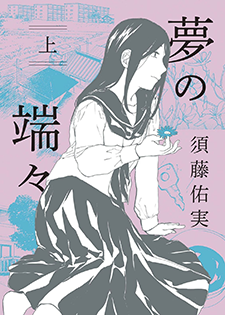
The Ends of the Dream
A thoughtful and sensitive take on the tragic lesbians genre. I would recommend if you're in the mood for a sad (but not completely depressing) period piece that acknowledges the real difficulties faced by LGBT people who spent their youth and most of their adulthood in inhospitable times that prevented them from living their true lives. Besides homophobia and compulsory heterosexuality, the two leads also deal with other issues between each other, and the ups and downs of their relationship being explored while the story cuts back and forth between different eras in time make for an engaging read. Also, despite tragedy and prejudice being themes explored frequently in LGBT-related fiction, the story is fortunately written in a modern point of view that frankly portrays the attitude of past eras (and to some extent the present one) while at the same time excising othering portrayals of queerness as deviant or unnatural that used to be commonplace in older narratives. Sex is discussed, but the portrayal isn't leering. There is no happy ending, but neither did I walk away despaired.
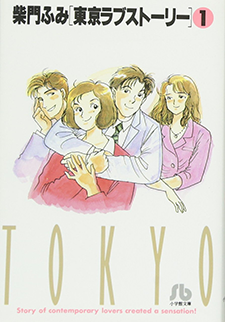
Tokyo Love Story
A fun, honestly pretty crazy and messy love story between a group of five young adults. I adore the art style and how deceptively simple the characters and their expressions look. I didn't always sympathize or love every decision the characters did, but that makes sense, since they're simply young adults trying to find themselves in the big city and making one or three or five impulsive decisions along the way. The pacing is smooth, every character is believably hair-tearingly messy, good blend of romantic comedy with dramatic moments and tinges of sadness. I might watch the live-action drama since it seems like a classic, and the story will remain fresh since it makes plot alteration. The only reason I don't love it more is probably because this kind of story fundamentally might not be the right fit for me - not of any fault of its own.
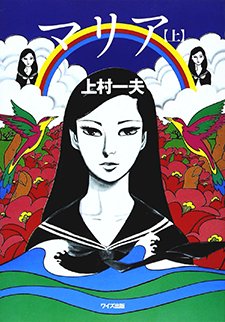
Maria
I didn't think I fully understood what was going on, but I enjoyed the lovely art and the atmosphere it created (beautiful women is a plus ofc the artist is very good at it). I felt like I was simply spending some time peeking into the life of Maria herself, never fully understanding her but still catching valuable glimpses of the heart of a young girl trying to find her way in the (then-)modern era. I enjoyed the story's frank portrayal of homosexuality and bisexuality; it was a pleasant surprise.